Where your home office desk faces can change everything about how you work. It affects your focus, mood, and even your energy throughout the day.
You might not realize it, but a simple shift in direction could make your tasks feel easier and your space more inviting. If you want to boost your productivity and feel more comfortable while working from home, you need to know the best way to position your desk.
Keep reading—this could be the small change that transforms your workday.
Desk Placement And Productivity
Choosing the right way for your home office desk to face affects your work focus. A well-placed desk can help you stay alert and organized.
Light, view, and space around your desk all play a part in your daily productivity. Small changes in desk placement can make a big difference.
Impact Of Desk Orientation
Your desk direction influences your comfort and work quality. Facing a wall may reduce distractions but can feel isolating.
Facing a window offers a view but might cause glare on your screen. Facing the door can boost alertness but may increase interruptions.
- Facing a wall helps focus by limiting distractions.
- Facing a window gives natural views but can cause glare.
- Facing the door raises awareness of your surroundings.
- Positioning diagonally can balance light and view.
Natural Light And Desk Position
Natural light improves mood and energy. Where you place your desk affects how much light you get.
| Desk Position | Effect on Natural Light | Possible Drawbacks |
| Facing Window | High natural light | Screen glare |
| Side to Window | Soft, indirect light | Light changes during day |
| Back to Window | Reduced glare | Shadows on workspace |
| Far from Window | Low natural light | Needs artificial lighting |
Facing The Door: Pros And Cons
Choosing the direction your home office desk faces affects your workday. Facing the door can change how you focus and feel.
This article looks at the benefits and distractions of facing the door in your workspace.
Benefits For Focus
Facing the door helps you see who enters the room. This can reduce surprises and help you stay calm. It also gives a clear view of the space, so you feel in control.
- Increases awareness of your surroundings
- Reduces anxiety by seeing people approach
- Improves sense of security
- Helps maintain good posture by facing the main entrance
Possible Distractions
Facing the door can also bring distractions. Movements and noises from the hallway or other rooms may catch your attention. This can break your concentration and slow down work.
| Distraction | Effect |
|---|---|
| People walking by | Interrupts focus and thought flow |
| Door opening and closing | Causes sudden noises that distract |
| Visitors entering | May lead to unexpected conversations |
| Outside noise | Breaks concentration and attention |
Window Views And Concentration
Choosing which way your home office desk should face can affect your focus. A window view brings natural light and a connection to the outside world.
But distractions and glare can reduce how well you concentrate. It helps to weigh the pros and cons of facing a window.
Advantages Of Facing Windows
Facing a window gives you fresh air and sunlight. It can boost your mood and reduce eye strain from screens.
- Natural light improves energy and alertness.
- Outdoor views can lower stress levels.
- Sunlight helps regulate your body clock.
- Looking outside offers short mental breaks.
Managing Glare And Distractions
Facing a window may cause glare on your screen. It can also bring noise or visual distractions.
| Issue | Solution |
| Screen glare | Use blinds or reposition monitor |
| Noise from outside | Close windows or use noise-canceling headphones |
| Visual distractions | Keep window view clear but avoid clutter |
Credit: www.designcafe.com
Facing A Wall: When It Works
Placing your home office desk facing a wall can help improve focus. This setup limits what you see, so distractions are fewer.
This arrangement works well if you want a simple and quiet workspace. It helps keep your attention on tasks without interruptions.
Minimizing Visual Distractions
Facing a wall reduces the chance of seeing movement or clutter. This stops your eyes from wandering around the room.
With fewer distractions, you can concentrate better on your work or study. This is good for tasks that need deep thinking.
Creating A Calm Workspace
A desk against the wall helps make your workspace feel tidy and calm. You can add simple decorations to keep it peaceful.
Using soft colors and keeping the area neat supports a relaxed mood. This setup helps reduce stress during work hours.
Ergonomics And Desk Orientation
Choosing the right direction for your home office desk can improve comfort and focus. Good desk orientation supports better posture and reduces strain.
This guide explains how to position your desk to create a healthy and productive workspace.
Comfort And Posture
Your desk should face a direction that reduces glare and lets natural light fall softly on your work area. Avoid facing a window directly to stop bright light from causing eye strain.
- Keep the monitor at eye level to prevent neck pain
- Position the desk so light comes from the side
- Use an adjustable chair to support your lower back
- Allow enough space under the desk for leg movement
Adjusting Desk Setup
| Desk Position | Benefits | Considerations |
|---|---|---|
| Facing a wall | Minimizes distractions | May feel closed in |
| Facing a window | Natural light boosts mood | Risk of glare on screen |
| Side to a window | Balanced light and view | Requires good blinds or curtains |
| Center of room | Open space feel | Possible distractions |
Adjust your desk position based on these points. Try different setups and choose what feels best for your body and work style.

Credit: www.digsdigs.com
Personal Preferences And Work Style
Choosing which way your home office desk should face can affect your work efficiency. It depends on your personal preferences and work style.
Some people prefer facing a wall for fewer distractions, while others like a window view for inspiration.
Individual Focus Triggers
Your focus can be influenced by the direction your desk faces. Some find a wall-facing desk helps them concentrate better.
- Desk facing a wall reduces visual distractions.
- Facing a window can provide natural light and calmness.
- Position your desk away from high-traffic areas.
Customizing Your Workspace
Customizing your workspace can make it more comfortable and suited to your needs. Arrange your desk and chair for ergonomic benefits.
| Workspace Element | Customization Tip |
| Desk | Choose a size that fits your work essentials |
| Chair | Adjust height for proper posture |
| Lighting | Use adjustable lamps for better visibility |
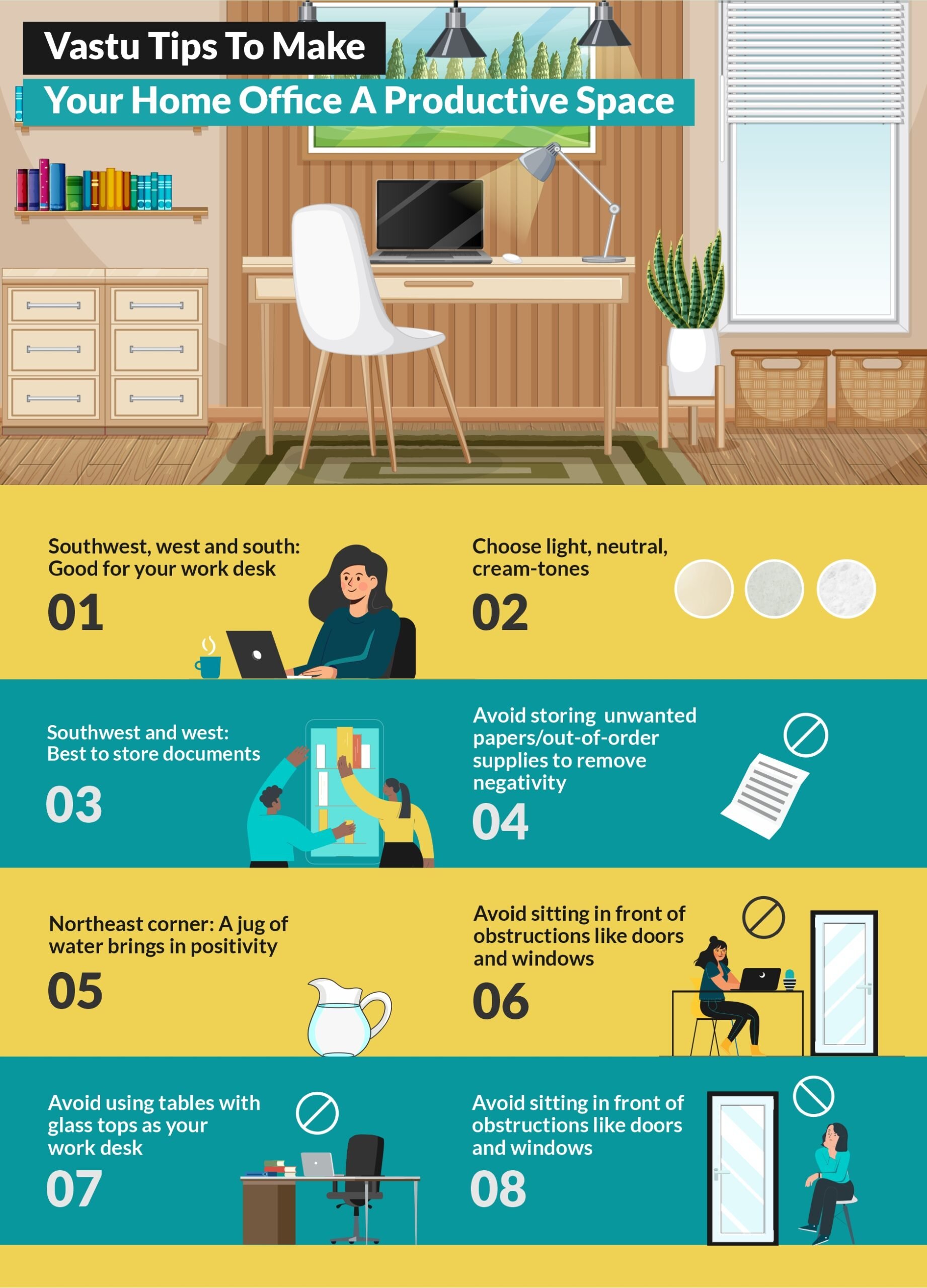
Feng Shui Tips For Desk Direction
Feng Shui is an ancient practice that helps in arranging your space for better energy flow. The way you position your home office desk can impact your productivity and mood.
By following Feng Shui principles, you can create a balanced and harmonious work environment. Let's explore how desk direction plays a crucial role.
Enhancing Energy Flow
Positioning your desk correctly can boost energy flow in your office. This ensures that you feel more focused and energized while working.
- Face your desk towards the door, but do not align directly with it.
- Avoid sitting with your back to the door to feel more secure.
- Keep your desk clutter-free to allow energy to circulate.
Balancing Elements In The Office
Balancing different elements like wood, water, and metal can create a harmonious office environment. Each element represents different energies and affects your work style.
| Element | Representation | Enhancement Tip |
| Wood | Growth | Add a small plant to your desk |
| Water | Flow | Include a small water feature |
| Metal | Clarity | Use metal accessories like a pen holder |

Credit: www.digsdigs.com
Technology Placement And Desk Layout
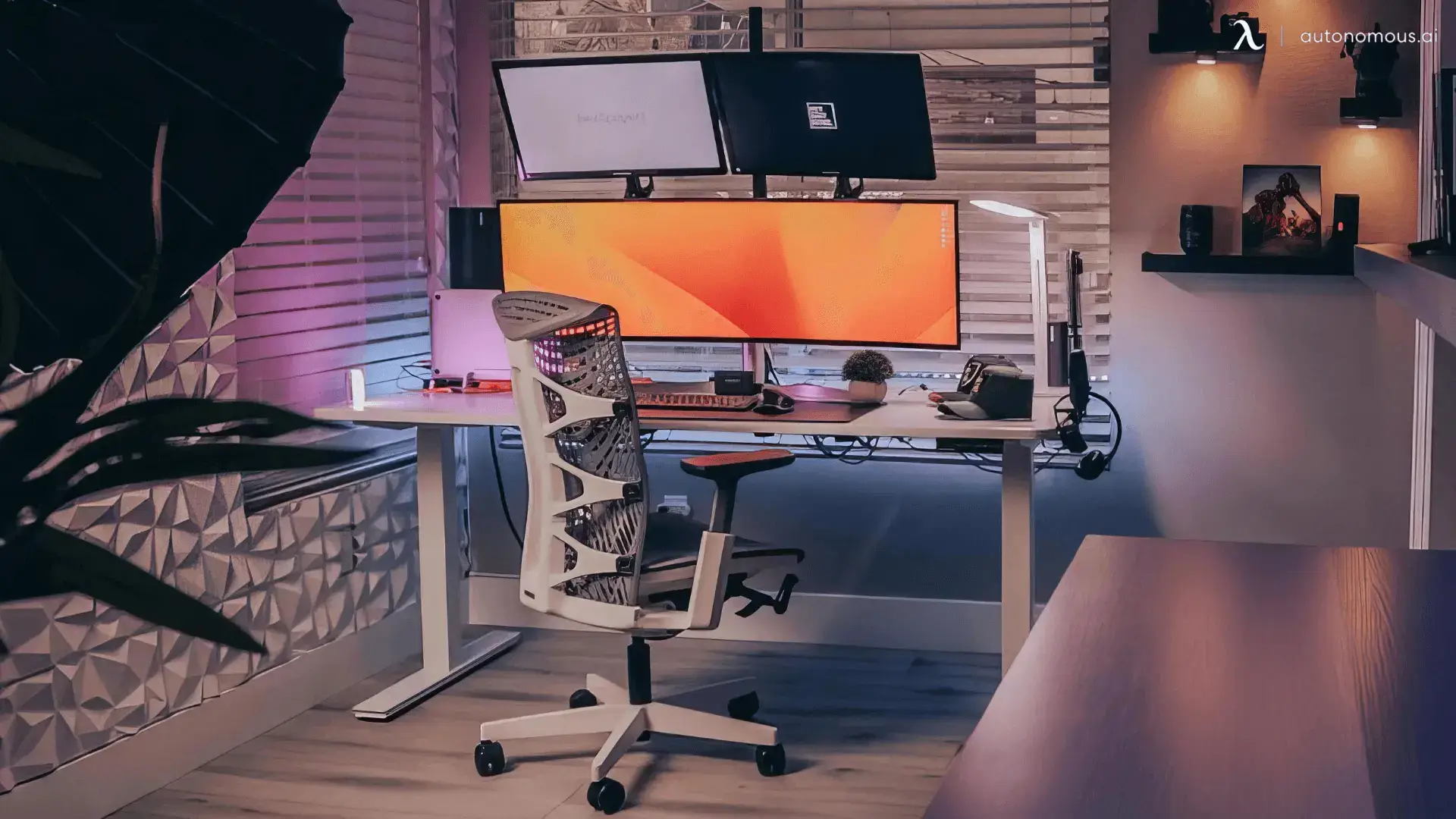
Setting up your home office desk correctly helps improve comfort and productivity. Proper technology placement and desk layout reduce strain and keep your workspace tidy.
Two key parts to focus on are screen positioning and cable management. These affect how you use your desk every day.
Screen Positioning
Place your monitor at eye level to avoid neck pain. The screen should be about an arm’s length away. Position it so natural light does not cause glare.
- Center the screen directly in front of you.
- Adjust the height so the top of the screen is at eye level.
- Keep a distance of 20 to 30 inches from your eyes.
- Use a monitor stand if needed to reach the right height.
- Avoid placing the screen near bright windows or light sources.
Cable Management
Organized cables keep your desk clean and reduce hazards. Use simple tools to secure wires and prevent tangling.
| Tool | Use | Benefit |
|---|---|---|
| Cable clips | Hold cables to the desk edge | Prevents cables from falling |
| Velcro straps | Bundle cables together | Stops tangling and clutter |
| Cable sleeves | Cover multiple cables | Keeps cables neat and protected |
| Under-desk trays | Hold power strips and cables | Frees up desk surface |
Frequently Asked Questions
Which Direction Should My Home Office Desk Face?
Your home office desk should ideally face the door or a window. Facing the door allows better awareness and reduces distractions. Facing a window provides natural light and a pleasant view, boosting productivity and mood.
Does Desk Orientation Affect Productivity?
Yes, desk orientation affects productivity. Facing distractions or a blank wall can reduce focus. A well-positioned desk with natural light and a clear view enhances concentration and work efficiency.
How Does Natural Light Influence Desk Placement?
Natural light improves mood, reduces eye strain, and boosts alertness. Position your desk near a window to benefit from daylight. Avoid glare on screens by adjusting the desk angle or using blinds.
Should My Desk Face Away From Distractions?
Yes, facing away from distractions helps maintain focus. Avoid placing your desk where you see busy areas or noisy spots. A calm, clutter-free view supports better concentration and productivity.
Conclusion
Choosing the right direction for your home office desk can boost your focus and mood. Facing a window offers natural light and a nice view. Facing a wall reduces distractions and helps you concentrate. Consider your room’s layout and personal comfort.
Small changes can make work feel easier and more pleasant. Experiment with different angles to find what suits you best. Your workspace should support your daily tasks and well-being. Keep it simple and adjust as needed for the best results.