Have you ever wondered if the direction your bed faces could affect your sleep, mood, or energy? It turns out, the way you position your bed in your bedroom can make a big difference in how rested and refreshed you feel each day.
Choosing the right direction isn’t just about style—it’s about creating a space that supports your well-being. You’ll discover which direction is best for your bed and why it matters. Keep reading, and you’ll learn simple tips that could transform your sleep and boost your daily energy.

Ideal Bed Directions
Choosing the right direction for your bed affects your sleep quality and well-being. Different directions bring different energies and benefits.
Below we explore the ideal bed directions: north, south, east, and west. Each has unique effects on health and rest.
North Facing Beds
Beds facing north can promote calm and deep sleep. This direction aligns with the earth’s magnetic field.
- Helps reduce stress and anxiety
- Supports better blood circulation
- May improve focus and memory
South Facing Beds
South facing beds bring warmth and energy. This direction is linked to increased activity during the day.
People who sleep with their head to the south often feel more confident and active.
East Facing Beds
East facing beds encourage new beginnings and fresh energy. This direction is ideal for early risers.
| Benefit | Details |
| Improved Concentration | Waking up with the sun sharpens focus |
| Better Mood | Exposure to morning light boosts happiness |
| Healthy Sleep Cycle | Supports natural body rhythms |
West Facing Beds
Beds facing west promote relaxation and winding down. This direction suits people who prefer sleeping late.
Here are some tips for west facing beds:
- Use soft lighting to enhance calmness
- Avoid bright screens before bed
- Keep the room cool and quiet
Cultural Perspectives
People from different cultures have unique ideas about the best bed direction. These ideas often come from ancient beliefs and practices. They aim to improve health, sleep quality, and harmony in life.
Understanding these cultural views can help you choose a bed direction that feels right for you. Below are guidelines from Vastu Shastra, Feng Shui, and Western sleep science.
Vastu Shastra Guidelines
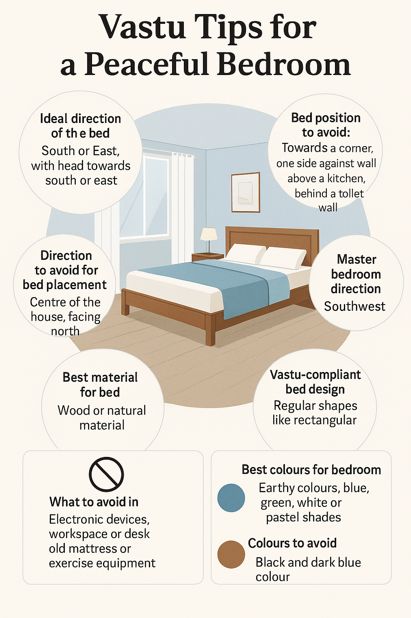
Vastu Shastra is an ancient Indian system that guides home design. It suggests directions for the bed to bring peace and good health.
According to Vastu, sleeping with your head to the south or east is best. Avoid placing your head to the north, as it may cause health problems.
- Head towards south: good for health and prosperity
- Head towards east: improves memory and concentration
- Head towards north: not recommended, may disturb sleep
- Head towards west: acceptable but less ideal
Feng Shui Recommendations
Feng Shui is a Chinese practice that balances energy in homes. It focuses on bed placement to enhance rest and relationships.
Feng Shui suggests placing the bed so you can see the door without being in line with it. The headboard should touch a solid wall for support.
- Place bed diagonally from the door for safety
- Headboard against a solid wall for stability
- Avoid bed under a window or beam
- Face east or south for better energy flow
Western Sleep Science
Western sleep science studies how environment affects sleep quality. It looks at light, noise, and comfort more than direction.
Science says bed direction matters less than reducing distractions. A quiet, dark, and cool room helps most people sleep well.
- Keep bed away from noisy areas
- Use blackout curtains to block light
- Choose a comfortable mattress and pillows
- Maintain a cool room temperature
Health And Sleep Quality
Choosing the right direction for your bed can affect your health and sleep quality. The way you place your bed influences how well you rest each night.
Good sleep helps your body heal and your mind stay sharp. This guide explains how bed direction impacts restfulness, energy, and mental health.
Impact On Restfulness
Sleep quality depends on how comfortable and relaxed you feel. Bed direction can reduce noise and light disturbances. This leads to deeper sleep cycles and less waking at night.
- Facing south may promote calmness.
- East-facing beds can help you wake up naturally.
- Avoid placing the bed under a window.
- Keep the headboard against a solid wall.
Effects On Energy Levels
The bed’s direction can influence your energy during the day. Correct placement supports better blood flow and reduces stress. This helps you feel more refreshed each morning.
| Bed Direction | Energy Effect |
| North | May cause low energy or tiredness |
| East | Boosts morning energy and alertness |
| South | Promotes calm and steady energy |
| West | Can cause restlessness in some people |
Mental Well-being
Your mental health can improve with the right bed placement. Proper direction reduces anxiety and helps your mind relax. This creates a peaceful space for rest and recovery.
Tips for better mental well-being through bed direction:
- Choose a bed direction that feels natural and comfortable.
- Keep the bedroom clutter-free to reduce stress.
- Use calming colors near the bed area.
- Ensure good airflow and natural light.
Room Layout Considerations
Choosing the best bed direction depends on your room's layout. The right position can improve comfort and space use.
Think about how your room’s features affect where the bed fits best. This helps you create a peaceful sleeping space.
Space Optimization
Place the bed to allow easy movement in the room. Avoid blocking walkways or furniture access.
- Keep at least two feet of space around the bed for walking.
- Use corners or walls that do not interrupt flow.
- Choose bed sizes that fit your room without crowding.
Window And Door Placement
Bed position near windows or doors affects light and noise levels. Find a spot that balances comfort and privacy.
| Bed Position | Effect |
| Under a window | May get drafts or bright light |
| Facing the door | Easy to see who enters |
| Away from doors and windows | Quieter and more private |
Avoiding Distractions
Keep the bed away from noisy areas or bright screens. This helps you rest better and feel calm.
- Do not place the bed near TVs or computers.
- Avoid spots next to busy streets or loud rooms.
- Use rugs or curtains to reduce noise and light.
Common Mistakes To Avoid
Choosing the best bed direction in a bedroom is important for good sleep. Many people make mistakes that cause discomfort or restlessness.
This guide helps you avoid common errors about bed placement. It focuses on facing the door, headboard placement, and personal comfort.
Bed Facing The Door
Placing the bed directly in line with the door can cause poor sleep. This position makes you feel less safe and can disturb rest.
Try not to place your bed so your feet point straight to the door. It creates tension and unease while sleeping.
- Do not block the door with the bed
- Avoid sleeping with feet facing the door
- Keep a clear view of the door without being in direct line
Headboard Placement Issues
The headboard should be against a solid wall for support. Avoid placing it under a window or in the middle of the room.
Wrong headboard placement can cause a feeling of instability and disrupt sleep. It also affects the room’s balance and look.
- Place headboard against a firm wall
- Do not put the headboard under windows
- Avoid headboard placement near noisy areas
Ignoring Personal Comfort
Sometimes people focus only on direction and forget comfort. Your bed position should fit your sleeping style and habits.
Ignoring your comfort leads to poor rest and body pain. Choose a bed spot where you feel relaxed and safe.
- Test different bed positions before deciding
- Consider natural light and noise levels
- Make sure there is enough space to move around
:max_bytes(150000):strip_icc()/spr-brooklinen-down-comforter-daniela-galvez-12-1-24cef4377f844f168646f8f1976fb2ba.jpeg)
Personalizing Bed Direction
Choosing the best direction for your bed in the bedroom is personal. It can affect your comfort and sleep quality. Explore different ways to personalize your bed's direction.
Considering Individual Preferences
Everyone has unique likes and dislikes. Some people sleep better facing a window. Others prefer a wall behind them.
Think about what makes you feel at ease. Your bed direction should match your personal comfort needs.
- Face a window for natural light
- Align with a wall for security
- Consider your morning routine
Experimenting With Angles
Trying out different angles can change the room's feel. A slight angle can make the space seem larger. It can also change how light enters the room.
Experiment with turning the bed slightly. This can create a cozy nook or a new perspective in your bedroom.
| Angle | Effect |
| Straight | Traditional look |
| Slight turn | More dynamic space |
| Diagonal | Unique and modern feel |
Adapting To Room Shape
The shape of your room can guide your bed's direction. In a long room, placing the bed along the shorter wall can save space. In a square room, the bed might fit best in the center.
Consider the room's layout. This helps ensure your bed fits well and leaves space for other furniture.
- Use corners for extra space
- Center the bed in square rooms
- Follow the room's flow

Frequently Asked Questions
Which Direction Is Best For Bed Placement?
The best bed direction depends on cultural beliefs and personal comfort. Generally, placing the bed with the headboard facing east or south promotes restful sleep and positive energy flow.
Does Bed Direction Affect Sleep Quality?
Yes, bed direction can influence sleep quality. Aligning the bed according to Vastu or Feng Shui principles helps improve relaxation, reduce stress, and enhance overall sleep.
How To Choose Bed Direction For Better Health?
Choose a bed direction that aligns with natural energy flow. Facing east or south supports better blood circulation and mental clarity, contributing to improved health and well-being.
Can Bed Direction Impact Relationships?
Yes, bed direction affects relationships by influencing harmony and emotional balance. Proper alignment fosters positive vibes, enhancing communication and intimacy between partners.
Conclusion
Choosing the right bed direction can improve your sleep quality. It helps your body relax and feel comfortable. Different cultures suggest various directions for good energy. Try placing your bed where you feel calm and safe. Listen to your body’s response to each position.
Small changes can make a big difference in rest. Sleep well, wake up fresh, and enjoy your day. Experiment to find what works best for you. Your bedroom should be a peaceful place. Rest matters—choose your bed’s direction wisely.