Are you tired of waiting forever for your clay projects to dry? Whether you’re working on a last-minute craft or eager to see your creation come to life, the slow drying process can be frustrating.
But what if you could speed it up safely and easily at home? You’ll discover simple, effective ways to make your clay dry faster without cracking or ruining your work. Keep reading, and you’ll be able to finish your projects sooner and enjoy your creativity without the wait.
Choose The Right Clay
Choosing the right type of clay affects how fast it dries. Some clays dry quickly at room temperature. Others need heat to harden well.
Knowing the differences helps you pick clay that suits your project and drying needs.
Air-dry Vs. Oven-bake Clay
Air-dry clay hardens by exposure to air. It needs no oven and dries naturally. Oven-bake clay stays soft until heated in an oven. The heat makes it firm.
- Air-dry clay is easy to use without special tools.
- Oven-bake clay requires a baking step for drying.
- Air-dry clay may take one to three days to dry fully.
- Oven-bake clay dries in 15 to 30 minutes in a home oven.
- Air-dry clay can crack if dried too fast or too thick.
- Oven-bake clay is more durable after baking.
Clay Thickness And Drying Time
Clay thickness changes drying speed. Thicker parts take longer to dry. Thin pieces dry faster but can break easily.
| Clay Thickness | Drying Time (Air-Dry) | Drying Time (Oven-Bake) |
|---|---|---|
| Less than 0.25 inch (6 mm) | 12 to 24 hours | 15 minutes |
| 0.25 to 0.5 inch (6-12 mm) | 1 to 2 days | 20 to 25 minutes |
| More than 0.5 inch (12 mm) | 2 to 3 days or more | 25 to 30 minutes |
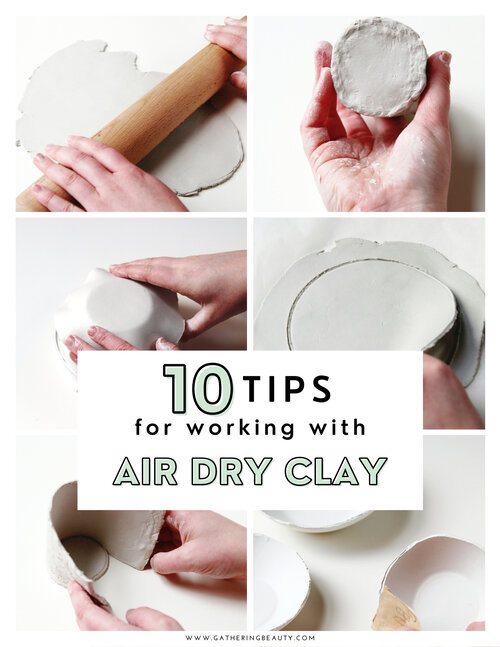
Credit: www.gatheringbeauty.com
Prepare Clay For Faster Drying
Clay can take a long time to dry if not prepared properly. Preparing it right helps speed up the drying process. This saves time and avoids cracks.
Two key ways to prepare clay for faster drying are kneading to remove moisture and using thin layers. Both methods help water evaporate quicker.
Kneading And Removing Moisture
Kneading clay removes extra water and makes it more even. This step is important for faster drying and better texture.
- Take the clay and press it firmly with your hands.
- Fold the clay over itself repeatedly.
- Continue kneading until the clay feels less sticky.
- If the clay is very wet, pat it with a dry cloth to absorb water.
- Work in a cool, dry place to help moisture evaporate.
Using Thin Layers
Thin layers of clay dry faster than thick blocks. Spread the clay thinly before shaping or storing it.
| Layer Thickness | Drying Time |
| 0.5 cm (thin) | 1-2 days |
| 1 cm (medium) | 3-4 days |
| 2 cm or more (thick) | 5+ days |
Natural Drying Techniques
Clay can take a long time to dry if you do not use the right methods. Natural drying techniques help you dry clay faster without using heat tools.
Using simple ways at home will keep your clay strong and prevent cracks. Two good methods are placing clay in a warm area and increasing air flow around it.
Use A Warm, Dry Area
Warmth helps water inside the clay evaporate faster. Choose a place in your home that is warm and dry to speed up drying. Avoid places with too much sunlight, which can cause cracks.
- Pick a sunny windowsill that gets indirect sunlight
- Use a room with a heater or radiator nearby
- Keep the clay away from damp or cold rooms
- Place the clay on a wooden or cardboard surface to absorb moisture
Increase Air Circulation
Good air flow helps moisture leave the clay faster. Moving air around the clay speeds drying and stops mold from forming.
| Air Circulation Method | How It Helps |
| Use a fan on low setting | Keeps air moving gently around clay |
| Open windows or doors | Brings fresh air to dry clay |
| Place clay on a rack | Allows air to reach all sides |
Use Heat To Speed Up Drying
Drying clay can take a long time, but heat helps. Using heat safely speeds up the drying process.
There are different ways to apply heat at home. Two common methods are oven drying and using a hair dryer.
Oven Drying Tips
The oven method is a popular way to dry clay. It provides even heat for faster drying.
Set your oven to a low temperature. This prevents cracking or burning the clay.
- Preheat the oven to 200°F (93°C).
- Place clay on a baking sheet.
- Check the clay every 10 minutes.
- Remove when dry to the touch.
Hair Dryer Method
A hair dryer can dry clay quickly. It is useful for small projects or details.
Use the hair dryer on a low heat setting. Keep it moving to avoid overheating one spot.
- Hold the dryer 6 inches away.
- Move in circular motions.
- Check dryness every few minutes.
- Turn off when clay feels dry.
Avoid Common Drying Mistakes
Drying clay too fast or in the wrong way can cause problems. These mistakes can make your clay crack or lose shape. Knowing what to avoid helps your project dry well and last longer.
Read these tips to keep your clay strong and dry it safely at home. Avoid common errors that slow down your work or ruin your creation.
Prevent Cracking
Cracks appear when the clay dries unevenly or too fast. You can stop this by handling your clay carefully and drying it slowly.
- Keep the clay covered with plastic to slow drying.
- Dry your piece in a cool, dry place away from direct sunlight.
- Turn or rotate your clay piece during drying to let all sides dry evenly.
- Use thin layers of clay rather than thick chunks to reduce cracking risk.
- If cracks form, smooth them with a damp sponge before drying finishes.
Avoid Overheating
Overheating clay causes it to dry too fast and can make it weak or brittle. Use gentle heat and watch closely to protect your work.
| Heat Source | Safe Use |
| Oven | Set to low temperature (around 200°F or 93°C) |
| Hair Dryer | Use on low heat and keep moving it |
| Sunlight | Indirect exposure, avoid strong midday sun |
| Space Heater | Keep several feet away, monitor drying progress |

Credit: claymoo.com
Additional Tips For Faster Results
Drying clay quickly helps you finish projects faster. You can use simple tricks at home to speed up the process.
These tips work well with air-dry and homemade clay. Try them to get better results without waiting too long.
Use Desiccants
Desiccants absorb moisture and can help dry clay faster. You can use materials you already have at home.
- Place clay near silica gel packs inside a closed container.
- Use dry rice in a cloth bag next to the clay for moisture absorption.
- Activated charcoal also helps reduce humidity around the clay.
- Keep the desiccants dry and replace them if they get damp.
Combine Techniques
Using more than one drying method can speed up the process. Combining heat, airflow, and desiccants works well.
| Technique | How to Use |
| Air Drying | Place clay in a warm, dry spot with good airflow. |
| Fan or Ventilation | Use a fan to blow air over the clay surface. |
| Desiccants | Put silica gel or dry rice nearby to soak moisture. |
| Low Heat | Use a low-temperature oven or sunlight cautiously. |

Credit: claymoo.com
Frequently Asked Questions
How Can I Speed Up Clay Drying At Home?
To speed up clay drying, place it in a warm, dry area with good airflow. Use a fan or dehumidifier to reduce moisture. Avoid direct sunlight to prevent cracking. These methods help clay dry evenly and faster.
Does Using A Hairdryer Help Dry Clay Faster?
Yes, a hairdryer can help dry clay faster by blowing warm air on it. Keep the dryer on low heat to avoid overheating or cracking. Move it continuously for even drying without damaging the clay.
Can I Dry Clay Faster With An Oven?
You can dry clay faster by placing it in a low-temperature oven (around 200°F). Heat it for short intervals, checking frequently to avoid burning. This method works best for small, thin clay pieces.
What Household Items Help Dry Clay Quickly?
Household items like fans, dehumidifiers, and low-heat hairdryers help dry clay quickly. Using these tools improves air circulation and reduces moisture, speeding the drying process. Always monitor the clay to prevent cracking or warping.
Conclusion
Drying clay faster at home is simple with the right steps. Use warmth and air, but avoid direct heat that cracks clay. Thin pieces dry quicker than thick ones. Turning the clay helps it dry evenly. Patience pays off—rushing can ruin your work.
Try these tips to save time and keep your clay projects strong. Enjoy crafting without long waits!