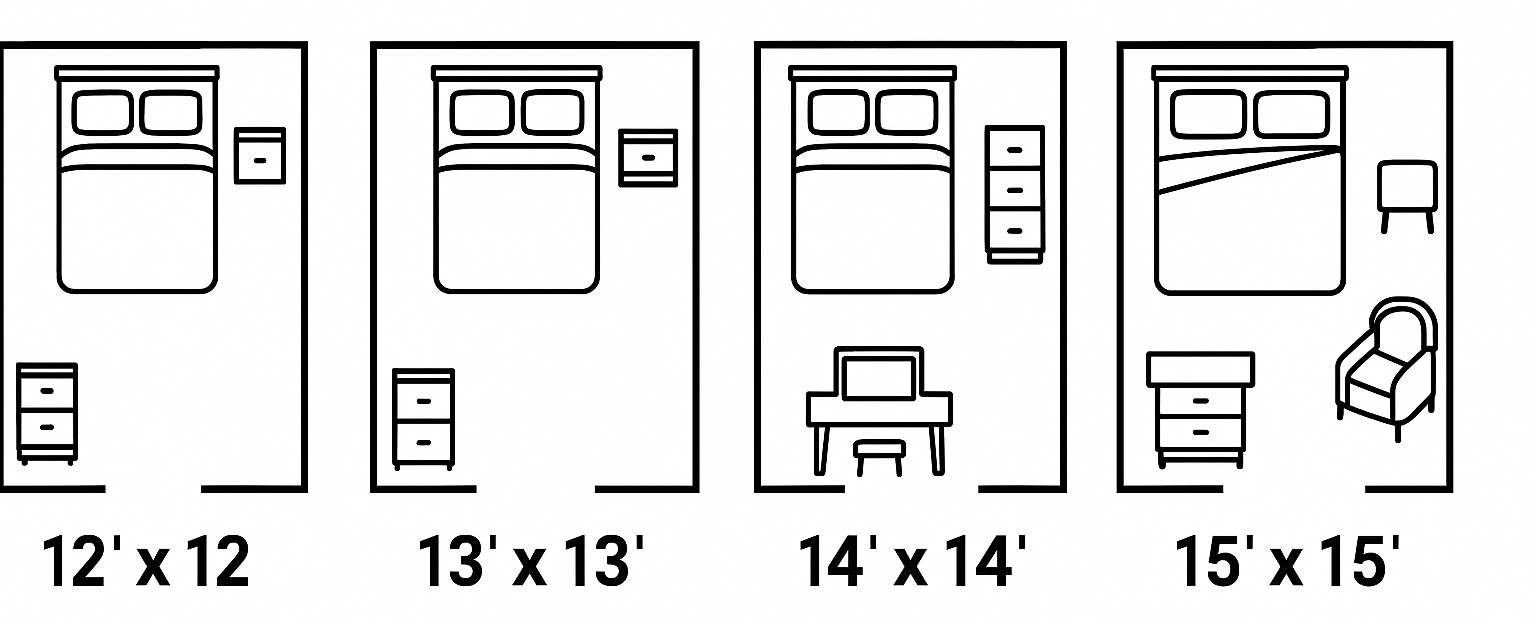
How much space should your bed take up in your bedroom? It’s a question that can make a big difference in how comfortable and functional your room feels.
You want a bed that fits perfectly—not too big that it overwhelms the space, and not too small that it leaves you tossing and turning at night. Finding that balance can change how you relax, move around, and even sleep.
You’ll discover simple tips to choose the right bed size for your room, so your bedroom feels just right every time you walk in. Keep reading to make your bedroom work better for you.
Choosing Bed Size
Selecting the right bed size is key for a good bedroom layout. The bed should fit the room comfortably and allow space to move.
This guide explains standard bed sizes, matching beds to room space, and mattress thickness to help you decide.
Standard Bed Dimensions
Beds come in common sizes that suit different needs and rooms. Knowing these sizes helps you pick the best fit.
| Bed Size | Width (inches) | Length (inches) |
| Twin | 38 | 75 |
| Full | 54 | 75 |
| Queen | 60 | 80 |
| King | 76 | 80 |
| California King | 72 | 84 |
Matching Bed Size To Room Size
The bed should not crowd the room. Leave space for walking and other furniture.
- Measure your bedroom before choosing a bed.
- Allow at least 24 inches of walking space around the bed.
- Smaller rooms suit twin or full beds.
- Queen or king beds fit well in larger rooms.
- Think about doors, windows, and closets when placing the bed.
Considering Mattress Thickness
Mattress thickness affects bed height and room feel. Thicker mattresses add comfort but take more space vertically.
| Mattress Type | Typical Thickness |
|---|---|
| Standard Foam | 8-12 inches |
| Memory Foam | 10-14 inches |
| Innerspring | 9-13 inches |
| Hybrid | 11-15 inches |
Optimal Bed Placement
Choosing the right spot for your bed is important for comfort and space use. It affects how easy it is to move around.
Planning bed placement helps make your bedroom feel balanced and functional. It also improves flow and light.
Allowing Walkway Space
Leave enough room around the bed for walking. This makes it easy to get in and out without bumping into furniture.
A good rule is to keep at least 2 feet of space on each side of the bed. This space helps with daily movement.
- 2 feet space at sides for walking
- 3 feet space at foot of the bed if possible
- Avoid blocking doorways or closets
Balancing Symmetry And Function
Place the bed so the room looks balanced. Symmetry creates a calm and orderly feel in the bedroom.
Balance the bed with nightstands or lamps on both sides. This adds function and improves the room’s look.
- Center bed on the main wall
- Use matching furniture on both sides
- Keep pathways clear for easy access
Positioning Near Doors And Windows
Keep the bed away from doors to reduce drafts and noise. This also gives more privacy while sleeping.
Place the bed near windows carefully. Use curtains to control light and protect from cold air.
- Avoid direct line with door
- Use curtains or blinds near windows
- Consider natural light for waking up
Balancing Furniture And Space
Choosing the right size bed is important for your bedroom. It should fit well without crowding the room.
Balancing furniture and open space makes the room comfortable and easy to move around.
Incorporating Nightstands
Nightstands add useful storage and surface space next to the bed. They should fit without blocking pathways.
Choose nightstands that match the bed size and allow at least 18 inches of walking space on each side.
- Keep nightstands low to avoid crowding
- Use slim designs for small bedrooms
- Ensure enough room for lamps and essentials
Allocating Space For Dressers And Seating
Dressers store clothes and keep the room tidy. Place them where they do not block doors or windows.
Seating areas like chairs or benches add comfort but need clear space to avoid clutter.
- Allow 24 inches of space in front of dressers
- Choose compact seating to save room
- Arrange furniture to keep paths open
Maintaining Open Floor Space
Open floor space makes the bedroom feel larger and less crowded. It helps with easy movement.
Keep at least 2 feet of open space around the bed and furniture for comfort and safety.
- Move large furniture away from doorways
- Use rugs to define open areas
- Avoid too many small furniture pieces

Room Functionality And Comfort
The size of your bed affects how comfortable and functional your bedroom is. Ensuring that your bed fits well is key to a pleasant environment.
Consider the space your bed occupies. It should allow easy movement and provide comfort for a good night's sleep.
Ensuring Easy Movement
Your bedroom should allow you to move freely. This means the bed should not take up too much space.
- Leave at least 24 inches of space on each side of the bed.
- Ensure you can open drawers and doors without obstruction.
- Avoid placing the bed directly in front of windows.
Creating A Relaxing Atmosphere
A relaxing bedroom atmosphere is essential for rest. The bed should be the focal point without overwhelming the room.
| Bed Size | Room Size | Comfort Level |
| Twin | Small | High |
| Queen | Medium | Medium |
| King | Large | Low |
Adapting For Shared Bedrooms
In shared bedrooms, managing space is even more crucial. Each person needs their own area for comfort.
Ensure that each person has enough room to move and their own storage space.
Tips For Small Bedrooms
Small bedrooms need smart ideas to save space. Choosing the right bed size is very important.
This guide helps you pick beds and furniture that fit well without crowding the room.
Choosing Compact Bed Frames
Compact bed frames take less floor space. They fit better in small bedrooms and leave room for other items.
- Look for beds with slim frames.
- Consider platform beds without big headboards.
- Use beds with built-in storage to save space.
- Choose foldable or wall beds if possible.
Using Multi-functional Furniture
Furniture that serves more than one purpose frees up room. It helps keep the bedroom neat and open.
| Furniture Type | Functions |
|---|---|
| Storage Bed | Bed + drawers for clothes or bedding |
| Sofa Bed | Sofa + bed for guests |
| Desk with Shelves | Workspace + storage |
| Ottoman | Seating + hidden storage |
Maximizing Vertical Space
Using walls for storage keeps the floor free. It also makes the room feel bigger and less crowded.
- Install shelves above the bed or desk.
- Use tall wardrobes or cabinets.
- Hang hooks for bags, hats, or clothes.
- Try loft beds to add space underneath for seating or storage.

Impact Of Bed Size On Sleep Quality
The size of your bed can affect how well you sleep. A bed that is too small may cause discomfort. On the other hand, a bed that fits the room well can help improve rest.
Choosing the right bed size is important for both comfort and space. This choice depends on who sleeps in the bed and the bedroom layout.
Space Needs For Couples
Couples need enough bed space to avoid disturbing each other. A small bed can cause restless nights and less deep sleep. Larger beds allow for movement without waking the partner.
- Queen size beds offer a good balance of space and room fit.
- King size beds provide extra room but need larger bedrooms.
- Full size beds may feel cramped for two people.
Effects Of Clutter On Rest
Clutter in the bedroom can reduce the space a bed takes up and affect sleep quality. A crowded room makes it hard to relax and can cause stress.
| Clutter Level | Effect on Sleep |
| Low | Promotes calm and better rest |
| Medium | Causes mild discomfort and restlessness |
| High | Leads to stress and poor sleep quality |
Personal Preferences And Health
Individual needs vary when it comes to bed size. Some may prefer more space for health reasons. Others like smaller beds to feel cozy and secure.
Factors to consider:
- Body size and sleeping position
- Health issues like joint pain or sleep apnea
- Comfort level with room space
:max_bytes(150000):strip_icc()/ways-to-style-small-bedroom-with-big-bed-GettyImages-14741546682-8e2e0f4da7264021bfeded4330f8fe19.jpg)
Frequently Asked Questions
How Much Space Should A Bed Occupy In A Bedroom?
A bed should take up about 30-40% of the bedroom floor space. This allows enough room for movement and other furniture, creating a balanced and comfortable environment.
What Is The Ideal Bed Size For Small Bedrooms?
For small bedrooms, a twin or full-size bed is ideal. It maximizes space without overcrowding, leaving enough room for storage and walking paths.
How Much Clearance Is Needed Around A Bed?
At least 24 inches of clearance is recommended around the bed. This space ensures easy movement and access to bedside tables or closets.
Can A Larger Bed Fit In A Small Bedroom?
Yes, but it requires careful planning. Prioritize essential furniture and minimize clutter to maintain comfort and accessibility.
Conclusion
Choosing the right bed size affects comfort and space in your bedroom. Leave enough space to walk and add other furniture. A bed should fit well without crowding the room. This balance helps the room feel open and cozy. Think about your daily habits and needs.
Measure your room before buying a bed. Small changes make a big difference in comfort. A good bed size helps you rest and relax better. Simple planning leads to a peaceful bedroom space.