Have you ever wondered whether the electricity powering your home is AC or DC current? Understanding the type of current flowing through your walls can help you make better decisions about your appliances, energy use, and even safety.
You might think it’s a simple question, but the answer could surprise you. You’ll discover what AC and DC currents are, why your home uses one over the other, and how this affects your daily life. Keep reading—you’re about to unlock a hidden piece of your home’s energy puzzle.
Credit: www.renogy.com
Electricity Types In Homes
Electricity powers almost everything in our homes. It comes in two main types: alternating current and direct current. Understanding these helps explain how our devices work.
Most houses use one type more than the other. This article explains the basics of both types of electricity used in homes.
Alternating Current Basics
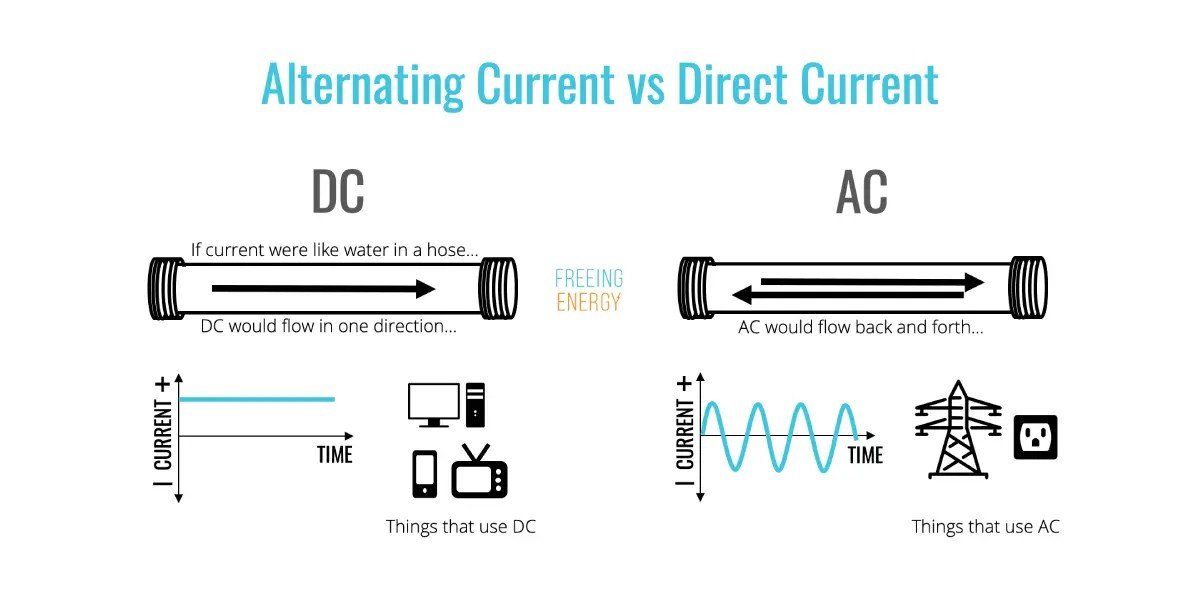
Alternating current (AC) is the main type of electricity in homes. It changes direction many times per second. This helps electricity travel long distances.
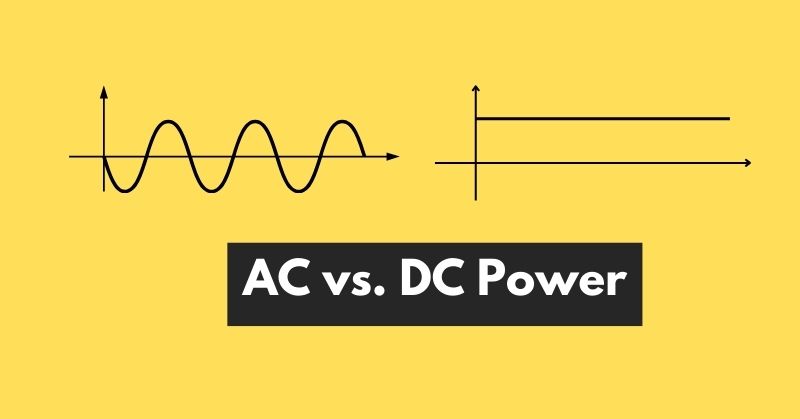
- AC flows back and forth in a cycle
- It allows easy voltage changes with transformers
- Homes receive AC from power plants
- Most household outlets provide AC power
Direct Current Basics
Direct current (DC) flows in one direction only. It is common in batteries and some electronic devices. DC is simple but does not travel far without loss.
| Feature | Alternating Current (AC) | Direct Current (DC) |
| Direction of flow | Changes periodically | Flows one way |
| Common use in homes | Power outlets, lighting | Batteries, electronics |
| Voltage change | Easy with transformers | Hard to change |
| Transmission distance | Long distances | Short distances |
Why Ac Is Common In Homes
Most homes use alternating current (AC) for electricity. AC is easier to send over long distances. This makes it the best choice for power companies.
Direct current (DC) is used in small devices but not in homes. AC powers lights, appliances, and heating systems in houses.
Advantages Of Ac For Power Distribution
AC changes direction many times each second. This helps electricity travel far without losing power. It is easy to increase or decrease AC voltage with transformers.
- AC voltage can be raised to travel long distances
- Lower voltage reduces power loss during transmission
- Transformers work only with AC
- AC is safer to switch on and off in homes
Historical Development Of Ac Use
In the late 1800s, engineers debated between AC and DC for power. Thomas Edison supported DC, while Nikola Tesla and George Westinghouse backed AC.
AC won because it traveled farther and was cheaper. Cities started using AC to power homes and businesses by the early 1900s.
Instances Of Dc In Residential Settings
Homes mainly use AC power for most appliances and lighting. Still, direct current (DC) plays a key role in some parts of the house.
DC power is common in devices that run on batteries or solar energy. Let’s look at where DC appears in homes.
Solar Panels And Dc Output
Solar panels generate electricity as DC power. The sun’s energy turns into direct current that flows out of the panels.
This DC electricity must change to AC before it powers your home’s outlets. An inverter does this conversion.
- Solar panels produce DC power naturally
- DC flows to an inverter for AC conversion
- Converted AC powers household appliances
Battery Storage Systems
Batteries in homes store energy as DC power. They save electricity from solar panels or the grid.
When the home needs power, batteries release DC electricity. The inverter then changes it to AC for use.
- Batteries charge with DC power
- Stored energy is in direct current form
- Inverter converts DC to AC for home use
Conversion Between Ac And Dc
Homes mostly use alternating current (AC). This is because AC travels easily over long wires. Many devices inside homes need direct current (DC) to work.
To make power usable for all devices, we must change AC to DC or DC to AC. This process is called conversion between AC and DC.
Role Of Inverters
Inverters change DC power into AC power. This lets devices that need AC run on DC sources like batteries or solar panels.
Inverters help connect solar systems or battery packs to home electricity. They ensure the right type of power flows to home appliances.
Appliance Power Requirements
Different appliances need different power types. Some use AC directly from home wiring. Others need DC inside the device.
Devices with batteries or electronics often convert AC to DC inside. This is why knowing power type helps in choosing the right appliance.
- AC powers lights, fans, and large machines
- DC powers phones, laptops, and LED lights
- Converters inside appliances change power as needed
Safety And Efficiency Considerations
Homes use either AC or DC current for electricity. Each type has its own safety and efficiency factors. Understanding these can help make informed decisions.
AC stands for alternating current, and DC is direct current. Both have unique benefits and challenges in home usage.
Ac Vs Dc Safety Factors
AC current is common in homes. It is safer for long-distance transmission. AC can be easily transformed to different voltages. This makes it more flexible for home use.
DC current is used in batteries and some electronics. It can be dangerous if not handled properly. DC is not easily transformed to other voltages, which limits its use in homes.
- AC is safer for transmitting over long distances.
- DC is safer in small, controlled devices like batteries.
- AC can change voltages easily with transformers.
Energy Efficiency In Home Systems
AC systems are more common in homes. They are efficient for powering large appliances. Most household devices are designed to work with AC current.
DC systems can be more efficient for small, portable devices. They are used in solar panels and some renewable energy setups. DC systems can reduce energy loss in short-distance applications.
- AC is efficient for large home appliances.
- DC is efficient in short-distance setups like solar panels.
- AC systems are more common in household devices.

Credit: www.jackery.com
Future Trends In Home Electricity
Homes today mostly use alternating current (AC) for electricity. This system has worked for many years. New technology is changing how we use power at home.
In the future, homes may use more direct current (DC) electricity. This change will affect how we manage energy and devices.
Rise Of Dc Microgrids
DC microgrids are small, local power systems that use direct current. They can work with solar panels and batteries. This system reduces energy loss in homes.
DC microgrids help connect devices that already run on DC power. This means less energy changes and better efficiency.
- Use solar panels to generate DC power
- Store energy in DC batteries
- Power DC devices directly without conversion
- Lower energy loss and higher efficiency
Smart Homes And Power Management
Smart homes use technology to control lights, heating, and appliances. They can manage electricity better. This saves energy and lowers bills.
Smart systems can switch between AC and DC power. They monitor energy use and adjust settings to match needs.
- Use sensors to track energy use
- Control devices remotely
- Switch between AC and DC for efficiency
- Schedule power use for off-peak times

Credit: www.premium-electric.ca
Frequently Asked Questions
Are Home Electrical Systems Ac Or Dc Current?
Homes primarily use AC (alternating current) for electrical systems. AC is efficient for long-distance power transmission. Most appliances and lighting run on AC power delivered through your home’s wiring.
Why Is Ac Current Used In Homes Instead Of Dc?
AC current is easier to transform between voltage levels. This makes power distribution safer and more efficient. DC is less practical for home power grids due to voltage conversion challenges.
Can Homes Use Dc Current For Electricity?
Homes typically do not use DC current directly from the grid. However, solar panels generate DC, which is converted to AC for home use. DC is common in batteries and electronics but not standard home wiring.
How Does Ac Current Benefit Household Appliances?
AC current allows appliances to operate with standard voltage and frequency. It supports motors, lighting, and heating efficiently. Using AC ensures compatibility with the national power grid and improves appliance performance.
Conclusion
Homes use alternating current (AC) because it travels long distances easily. AC powers lights, appliances, and electronics in most houses. Direct current (DC) is common in batteries and small devices. Understanding the difference helps with basic electrical knowledge. Knowing this can improve safety and awareness at home.
Electricity keeps daily life running smoothly and efficiently. Simple facts like these make electricity less confusing for everyone.